


To calculate quarterly estimated taxes without breaking into a sweat is the ultimate goal of every independent worker. FreeFinanceHelp knows exactly how you feel right now. You are sitting at your desk, looking at your bank account dashboard after a hard month of freelance or client contract work, and feeling a heavy knot in your stomach. The quarterly tax deadline is approaching, and you are terrified that you haven’t saved enough. Being a 1099 independent contractor or solo operator in the US, UK, or Canada brings immense freedom, but it also brings a quiet, nagging fear. You worry that one simple calculation mistake will bring a stressful letter from the IRS or HMRC, wiping out your hard-earned business cash flow overnight.
Let’s be completely honest with each other. The government tax system is not designed to be friendly to self-employed operators. While corporate employees have their taxes automatically deducted from every single paycheck, you are left completely on your own to figure out complex tax brackets and self-employment rules. It feels entirely unfair that doing your best to build your own business means dealing with massive tax anxiety every three months. But you are not alone, and you are not in trouble. The tax authorities do not want to destroy your business; they just operate on formulas. You can completely remove this stress by learning a simple framework to calculate quarterly estimated taxes safely from your own kitchen table.
The Bracket-Hold Safe Reserve System
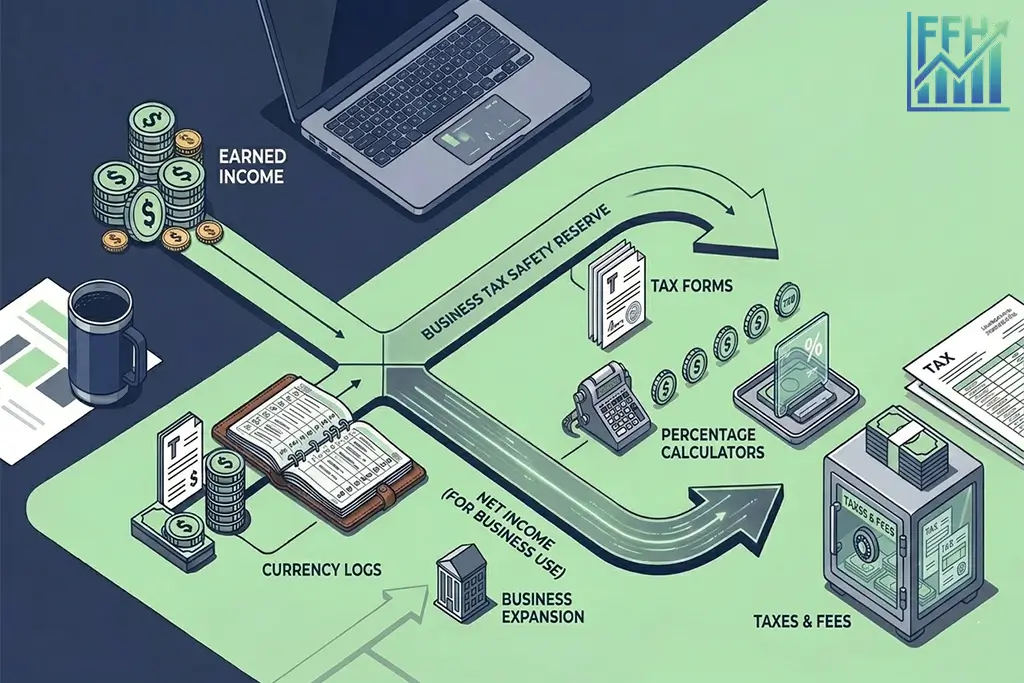
The absolute secret to surviving tax deadlines without panic is changing how you view your incoming client revenue. Most independent workers make the mistake of treating every dollar or pound that hits their account as personal spending money, waiting until the end of the quarter to guess what they owe. This old way leaves you scrambling for cash at the last second. When you calculate quarterly estimated taxes on a rolling basis, a healthy business framework operates on a continuous preservation sequence. It means taking a fixed, defensive percentage out of every single invoice payout the exact day it arrives, before you pay a single personal bill.
Instead of letting tax calculations overwhelm your daily work schedule, take a deep breath and follow this friendly corporate safety routing:
- Isolate Your True Net: Never calculate your tax obligations using your raw gross invoicing. Deduct your legitimate business expenses (like software tools, home internet, and hardware) first to find your actual taxable base.
- Deploy the Separate Safe Tank: Open a dedicated business high-yield savings account completely separate from your personal spending network. Move your tax reserves there instantly so you never see that money as available liquidity.
- Track Your Local State Tiers: Remember that self-employment taxes involve multiple layers. You must account for federal tiers as well as localized state, provincial, or national insurance metrics.
- File on Time Regardless of Cash: If a difficult business month leaves you short on tax cash, file your paperwork on time anyway. The penalty for failing to file documentation is much higher than the interest on a structured government payment plan.
Fast Self-Employment Tax FAQs
What happens if my quarterly tax estimate is slightly incorrect?
The tax networks do not expect absolute perfection. In most western markets, as long as you pay at least 90% of your current year’s liability or 100% of last year’s tax total through safe harbor rules, you will face zero penalties. Small variances are simply adjusted without stress during your final annual filing.
What business deductions can I legally use to lower my tax base?
Any specialized asset required to run your daily workflow is an investment deduction. This includes a percentage of your monthly home office rent, internet utilities, website hosting packages, advertising costs, and software memberships. Tracking these micro-deductions can save you thousands of dollars annually.
🧮 We Built a Free Workspace Tool for You: Trying to calculate complex, multi-tiered self-employment tax formulas while managing clients and deadlines is simply exhausting. To preserve your energy and give you absolute clarity, FreeFinanceHelp built a free standalone workspace for you to calculate quarterly estimated taxes instantly. Pull it up on your phone instantly to access advanced tax dashboards, run real-time variable toggle calculations, and find your exact safety payment horizons.
👉 Click here to launch our full-screen dynamic 1099 Quarterly Estimated Tax Calculator dashboard module directly.
Disclaimer: The calculation profiles provided across this platform exist strictly for general educational utility. FreeFinanceHelp does not operate as an authorized consumer credit counseling firm, certified public accountant (CPA), or licensed legal financial advisory agent. Double-check all active physical guidelines and state tax portals before altering your baseline fiscal allocations.